Where Wolnosia Began
The Original Talisman
In 1939, defending his home city of Warsaw, Zbigniew was taken prisoner. He would spend the rest of the war behind the wire of German camps.
At Aslau — today the Polish village of Osła — prisoners were used as forced labour, assembling parts for Focke-Wulf fighter aircraft. It was almost certainly from that same metal — material meant for the machinery of war — that he secretly shaped a small cigarette box.
On one face he carved the crowned white eagle of Poland — the age-old emblem of a free nation — surrounded by barbed wire. The eagle is freedom itself; the wire closing around it, the freedom that had been taken away. It is the mark Wolnosia carries to this day.
On the reverse he hand-engraved a single word: WOLNOŚĆ, Polish for freedom.
He added his prisoner numbers, and engraved the initials of his mother — set there in the hope that he would live to see her again.
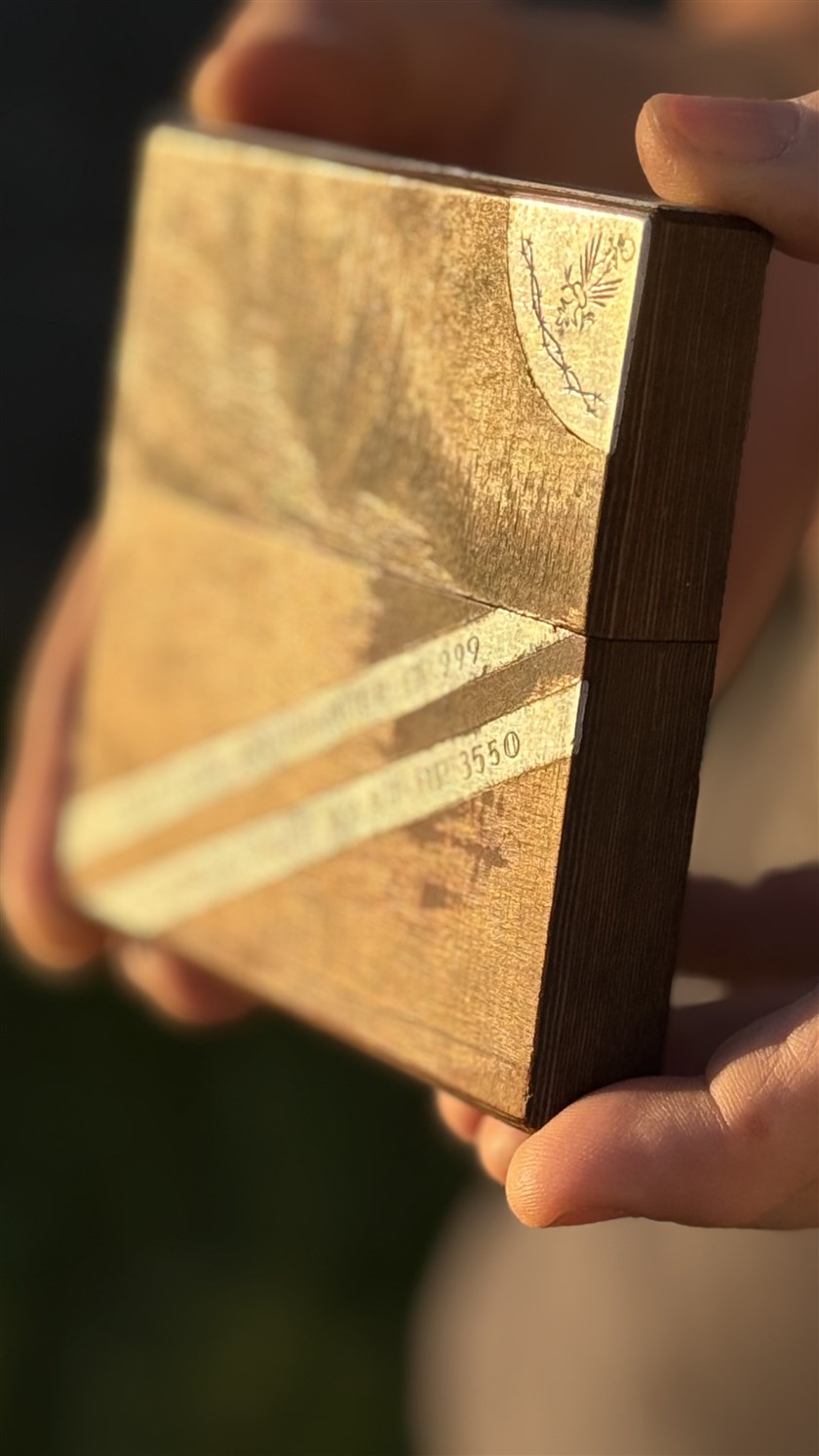
He kept the box hidden as he was moved from camp to camp. When the war ended, he searched for his mother, but she could not be found — presumed murdered. With no family left in Poland, he took his few possessions and began a new life in Australia, the box among the only things he carried.
That box carried Zbigniew through the worst of it — the strength to endure, the hope to keep going, and, in the end, his freedom. It is the original talisman. Every Wolnosia piece is made in its image: strength, hope and freedom, small enough to hold, and made to be kept.
WOLNOŚĆ — the word he engraved.
Wolnosia — the promise we keep.